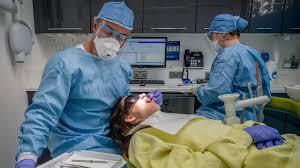
At first glance, dental care Scotland looks like the rest of the UK. Same NHS logo. Same idea of public dentistry. But once you scratch the surface, it’s a different system entirely. Fees work differently. Registration works differently. Even patient rights feel different. This matters if you’re trying to find a Scottish NHS dentist, or if you’ve moved north from England and assumed nothing really changes. It does.
How NHS Dental Registration Works in Scotland
Scotland still operates a true NHS dental registration system, unlike England. Once you register with an NHS dentist in Scotland, you remain registered unless you move, request removal, or are removed for non-attendance over a long period. This is not temporary course-by-course access. It’s ongoing registration, confirmed by Public Health Scotland data showing over 96% of the population registered as of late 2025 .
That alone sets Scotland apart. In England, registration effectively ends when treatment ends. In Scotland, registration is a structural feature, not a courtesy.
Access Levels Are Higher, But Not Perfect
Registration rates in Scotland remain significantly higher than elsewhere in the UK. Over 5.2 million people are registered with an NHS dentist, according to official statistics . That sounds reassuring. And to a point, it is.
But registration does not equal regular access. Participation data shows many registered adults have not seen a dentist in over two years, especially in more deprived areas . So yes, the system holds your place. No, it doesn’t guarantee an appointment next week.
NHS Scotland Dental Fees Don’t Use Bands
One of the biggest shocks for patients moving north is cost structure. NHS Scotland dental fees do not use the Band 1, 2, 3 system found in England. Instead, Scotland applies item-based pricing with a clear cap.
Patients who pay contribute 80% of treatment costs, up to a maximum of £384 per course of treatment. Anything above that is fully covered by the NHS . You will never pay more than that cap, no matter how complex the treatment becomes.
Also important. NHS dental examinations in Scotland are free for everyone. No charge at all. That includes check-ups, which is not the case elsewhere in the UK .
Young Adults Get Extra Support
Scotland provides expanded dental support for younger adults. Anyone aged 18 to 25 receives free NHS dental examinations, treatment, and appliances. This policy is unique within the UK and has been repeatedly reaffirmed by NHS Scotland guidance .
This isn’t a temporary scheme. It’s embedded policy. The aim is prevention early, cost avoidance later. Whether it succeeds long-term is debated. But the coverage is real.
How Dentists Are Paid, And Why It Matters
Behind the scenes, NHS dentists in Scotland are paid under a different remuneration framework. Fee uplifts, known as SDR updates, are applied nationally. The most recent uplift took effect in November 2025, adjusting item fees across the system .
Dentists also received a 4% pay uplift, backdated to April 2025, as confirmed by the Scottish Government and the DDRB process . This matters because pay stability directly affects NHS participation. Scotland has managed to retain more NHS dentists than other UK nations, partly for this reason.
Private Dentistry Still Exists, But NHS Is the Default
Private dental care is available across Scotland, of course. But the system is structured so NHS care remains the default option, not the fallback. Because registration is ongoing, patients are less frequently pushed into private care simply due to administrative gaps.
That doesn’t mean waiting times are short everywhere. Rural areas still struggle. Deprivation still affects attendance. But structurally, Scotland has chosen continuity over churn.
Moving to Scotland? Your Dental Rights Change
If you move to Scotland from England or Wales, you must register with an NHS dentist again. Your previous registration does not transfer. Once registered, though, you gain access to Scotland’s system, including free check-ups and capped charges .