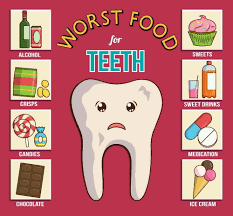
We all know some foods aren’t great for our waistlines, but did you know certain everyday eats can actively harm your teeth too? Beyond skipping sweets, there’s a whole list of foods that damage teeth — things you might reach for without thinking — that fuel bacteria, erode enamel, or even crack your enamel outright. This article digs into the worst foods for teeth, why they are damaging, and healthier swaps you can use that still feel satisfying (and tasty).
What you eat matters almost as much as how you brush and floss. Your mouth is constantly bathed in saliva, food acids and bacterial by-products. Add repeated exposure to harmful foods, and you create an acidic environment that literally eats away at your enamel and sets the stage for decay and gum problems. Let’s unpack this in a way that actually sticks.
Sugary Snacks and Sweet Drinks — A Big Threat to Your Smile
Candies, cakes, sodas — they’re more than just sugary. The sugar isn’t just empty calories, it feeds bacteria in your mouth that convert it into acidic waste products. This acid attacks the enamel — the hard, protective outer layer of your teeth — making it softer and prone to decay. Sticky treats like chewy candies or caramels are especially bad because they cling to your teeth, giving bacteria more time to work. Frequent sugar exposure is linked with a greater risk of cavities and inflammation of the gums. The worst part? Even “healthier” sweet treats like fruit pops or sweetened cereals fall into this category because of their high added sugar content.
Swap to fresh fruit, plain yogurt with berries, or nuts if you’re craving something sweet. These choices are less likely to stick and still satisfy your snack cravings.
Acidic Drinks and Citrus Overload — Enamel Under Attack
Fruit juice might seem wholesome, but even 100 % juice is high in acid. That acid can soften and erode enamel over time, making teeth more vulnerable to cavities and sensitivity, especially if you sip throughout the day. Soda, sports drinks and energy drinks make things worse — they combine acid plus sugar plus constant sipping, a triple threat that bathes your enamel in decay-promoting conditions. And yes, even diet sodas or sugar-free fizzy drinks are acidic enough to contribute to enamel erosion.
You don’t have to ban citrus entirely — that would be extreme — but drink it with meals, rinse with water afterward, or use a straw to reduce contact with teeth. Water, herbal tea, or sparkling water without sugar are gentler on enamel.
Refined Carbs and Starches — Sneaky Decay Builders
White bread, crackers, chips, and similar processed carbs are often overlooked when people think about sugar, but these foods break down into sugars in your mouth — the same way candy does. Once broken down, they stick into crevices and feed the bacteria in plaque. That prolonged sugar exposure results in acid production and enamel erosion just like sucrose from sugary sweets. A diet high in refined carbohydrates is linked with increased risk of cavities.
Better options? Whole grain versions, sweet potatoes, and whole fruits provide fiber and nutrients and break down more slowly, reducing the sugar load in your mouth.
Sticky, Chewy and Dried Foods — Sugar Traps You Can’t See
Dried fruits, chewy sweets, caramels — these foods are deceptively harmful because their texture keeps sugar close to the tooth surface for longer. Sticky foods become lodged between teeth and along the gumline, giving bacteria more time to produce acid. Even though dried fruit has nutrients, its sugar concentration and stickiness put it in the foods that damage teeth category if eaten frequently without follow-up brushing or rinsing.
If you love dried fruit, pair it with meals and drink water afterward, or simply reach for fresh fruit instead.
Hard and Crunchy Hazards — Structural Damage, Not Just Decay
Chewing ice cubes might seem harmless because it’s just frozen water, but all that hard chewing can crack or chip enamel or even damage dental work like fillings and crowns. The same goes for hard candies and unpopped popcorn kernels — they don’t cause decay through sugar, but tiny chips or fractures can create rough surfaces where plaque accumulates more easily and pain can follow.
For a satisfying crunch that’s good for your teeth, reach for raw vegetables like carrot sticks or apples — they increase saliva and help naturally clean away some food debris.
Alcohol, Coffee, and Tea — More Than Just Staining
Coffee and tea might stain teeth over time, but combined with sugar or creamers they contribute to decay. Meanwhile, alcohol dries out the mouth, reducing saliva flow. Saliva is your mouth’s first defence — it neutralises acids and helps wash away food particles. A dry mouth creates an environment where decay can advance faster.
Swapping some of that coffee or alcohol for water throughout the day keeps saliva flowing. Rinse with water after a sugary latte. Treat these drinks as occasional pleasures rather than constant companions.
Fruit Juices, Starchy Meals, and Constant Snacking — Bad Habits Added In
Juices — even 100 % fruit — are acidic and can lead to enamel erosion. Combine that with snacking throughout the day and your mouth never gets a break from acid attacks. Sometimes it’s not what you eat but how often. Constant nibbling keeps acid levels high, giving bacteria endless fuel.
Aim for regular meals with sensible snacks and follow up with water or dental hygiene as soon as feasible.
Healthier Habit Shifts That Actually Protect Your Smile
Recognising the foods that cause enamel erosion or promote decay doesn’t mean your diet has to be miserable. Instead of reaching for soda, choose water or unsweetened tea. Instead of chips or white bread, go for whole grains, crunchy veggies, and nuts. When you enjoy acidic or sugary foods occasionally, rinse with water and aim to brush about 30 minutes afterward to avoid brushing softened enamel.
A balanced diet full of nutrient-dense choices — with limited sugary, sticky, starchy, and acidic foods — gives your teeth and gums the environment they need to stay healthy. Regular dental hygiene rituals and mindful eating go hand-in-hand if you truly want a strong, cavity-resistant smile.
Your mouth deserves more than reactive care — it deserves a proactive diet that protects enamel and supports overall dental health. Avoiding the worst foods for teeth and embracing smarter alternatives makes that goal realistic, daily and sustainable.